

THE ECONOMICS BEHIND PRIVATE JET CHARTER PRICING
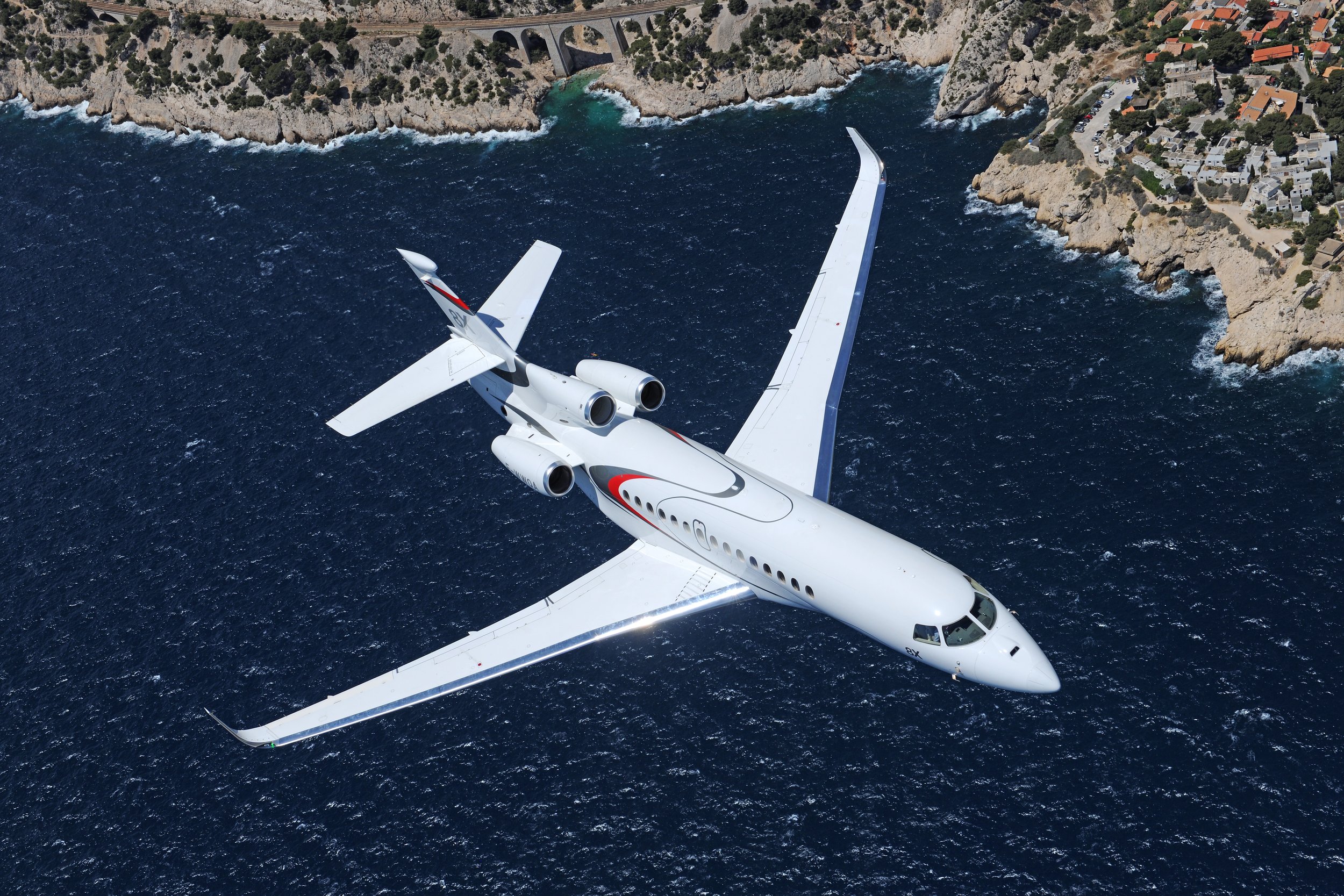
A private charter quotation can change materially without any obvious change to the passenger requirement.
The route may be identical. The aircraft category may remain the same. The number of passengers may not have moved by one.
Yet a quotation produced on Monday can look very different from one produced later in the week.
For clients familiar with the charter market, this is not particularly surprising. Aircraft positioning, utilisation, airport constraints and the operator's wider programme can all influence the economics of an individual flight.
What is less obvious is how these variables interact.
The price of a charter is ultimately a reflection of the aircraft movement required to fulfil the itinerary, rather than simply the distance between two airports.
THE PASSENGER SECTOR IS ONLY PART OF THE MOVEMENT
A charter client sees a sector from A to B.
The operator sees a complete aircraft programme.
The aircraft may need to position to the departure airport, operate the client's flight and subsequently reposition elsewhere. Depending on the programme, some of those sectors may already be commercially covered, while others become an additional cost attributable to the charter.
This is one of the fundamental reasons that two operators can quote materially different prices for what appears to be the same flight.
An aircraft already positioned near the point of departure may require relatively little additional movement. Another aircraft may need to fly several hours simply to become available for the charter.
The difference can be significant.
AIRCRAFT LOCATION & NETWORK POSITION
Aircraft location is therefore one of the first variables considered when sourcing a charter.
But proximity alone does not determine value.
An aircraft based 30 minutes away may be committed immediately afterwards, requiring a complex repositioning sector. Another aircraft several hundred miles away may already be scheduled to move in the client's direction.
The second aircraft may therefore produce the stronger overall proposition.
This is why effective charter sourcing involves looking beyond the aircraft's current location and understanding its position within the wider operator network.
UTILISATION CHANGES THE ECONOMICS
Aircraft utilisation also plays an important role.
An aircraft operating a high level of charter activity has fewer unallocated hours within its programme. The operator may therefore have less flexibility to absorb positioning or schedule changes.
Conversely, an aircraft with an open period in its programme may provide greater commercial flexibility, particularly where the proposed charter helps utilise otherwise unproductive time.
This does not mean that a lower-utilisation aircraft is automatically cheaper. Operator cost structures vary considerably, and factors such as crew, maintenance, financing, insurance and aircraft configuration remain relevant.
The important point is that the marginal economics of a particular sector can differ between aircraft and operators.
AIRPORT CONSTRAINTS CAN INFLUENCE COSTS
Airport choice can also have a material effect on the quotation.
Slots, handling availability, parking, operating hours and runway limitations can all affect how an aircraft can be positioned and operated.
During periods of concentrated demand, these constraints become more relevant.
European aviation experienced an exceptionally busy summer in 2026, with EUROCONTROL reporting 35,959 average daily flights between June and August—2.4% above summer 2025—and a record 37,659 flights on 24 July.
More recently, the network averaged 35,893 daily flights during 7–13 September, while en-route ATFM delays increased 22% week-on-week.
For charter, network congestion does not translate directly into a fixed pricing premium. However, it illustrates the operating environment in which aircraft, airports and crews are being scheduled. A constrained airport can affect an aircraft's positioning requirements, turnaround and subsequent programme.
EMPTY SECTORS CAN WORK BOTH WAYS
Positioning is often viewed purely as an additional cost, but it can also create an opportunity.
If an aircraft is already required to reposition for another commercial reason, a client may be able to utilise that movement.
This is the underlying principle behind many attractive empty-leg opportunities.
However, the economics depend entirely on the aircraft's programme. An empty sector that looks compelling in isolation may cease to exist if the underlying charter changes.
For this reason, empty-leg pricing should be viewed as a product of a particular operational circumstance rather than a permanent discount against normal charter rates.
AIRCRAFT TYPE STILL MATTERS
Aircraft type remains an important variable, but its influence is more nuanced than simply comparing hourly rates.
A larger aircraft may have a higher direct operating cost but could accommodate the required payload without a technical fuel stop. A smaller aircraft may have a lower hourly rate but require additional positioning or impose baggage and range limitations.
Similarly, an aircraft with a more suitable cabin configuration may provide a better solution for a particular group even where another aircraft initially appears cheaper.
The most useful comparison is therefore total mission cost and suitability, rather than an isolated hourly figure.
DEMAND CAN CHANGE THE AVAILABLE OPTIONS
Charter markets can become particularly sensitive when demand concentrates around specific dates, destinations or aircraft categories.
Major sporting events, conferences, seasonal leisure peaks and large corporate movements can place disproportionate pressure on a relatively small pool of suitable aircraft.
The European business aviation market remains significant within the wider aviation system. EUROCONTROL's 2025 Network Operations Report recorded business aviation growth of 1.7% year-on-year, with activity 11.4% above 2019 levels.
When demand increases, the issue is not necessarily that every aircraft becomes more expensive. Rather, the number of commercially attractive aircraft options can narrow.
That distinction matters.
THE VALUE OF TIMING
Timing can influence the outcome of a charter enquiry in several ways.
An early enquiry gives a broker greater opportunity to assess the market, compare operators and identify aircraft whose existing programmes align with the client's requirements.
As the departure date approaches, suitable aircraft may become committed elsewhere, leaving fewer options and potentially increasing positioning requirements.
For complex itineraries, early planning is particularly valuable because it provides more opportunity to optimise the aircraft's complete movement rather than simply accepting whatever remains available.
LOOK BEYOND THE HEADLINE PRICE
A sophisticated charter comparison should therefore consider more than the final figure.
Questions worth asking include:
Where is the aircraft coming from?
What is it doing immediately before and after the charter?
How much positioning is built into the quotation?
Are there airport or parking constraints?
Is the aircraft genuinely suitable for the payload and itinerary?
How robust is the proposed schedule if the surrounding programme changes?
These factors provide considerably more insight than comparing two hourly rates.
THE LEVARE APPROACH
At Levare Aviation, we view the quotation as the outcome of an operational equation rather than simply a price attached to an aircraft.
We assess the aircraft, its location, existing programme, airport requirements and the structure of the proposed movement before comparing suitable options.
That approach is particularly important for multi-sector programmes, corporate movements and time-sensitive charter, where the cheapest aircraft on paper is not necessarily the most effective solution.
In a market where aircraft availability can change quickly, understanding why an aircraft is available can be just as important as knowing that it is available.
The strongest charter solution is ultimately the one that balances operational suitability, commercial efficiency and reliability across the entire journey.
READY TO FLY?
Tell us the requirement — destination, dates, number of passengers, and any specific needs — and we'll come back with aircraft options and a quote.